Energy bill calculator UK: estimate costs in minutes
Estimate a realistic UK energy bill in minutes. Enter kWh and tariff rates to see monthly and annual costs, based on current Ofgem cap averages.
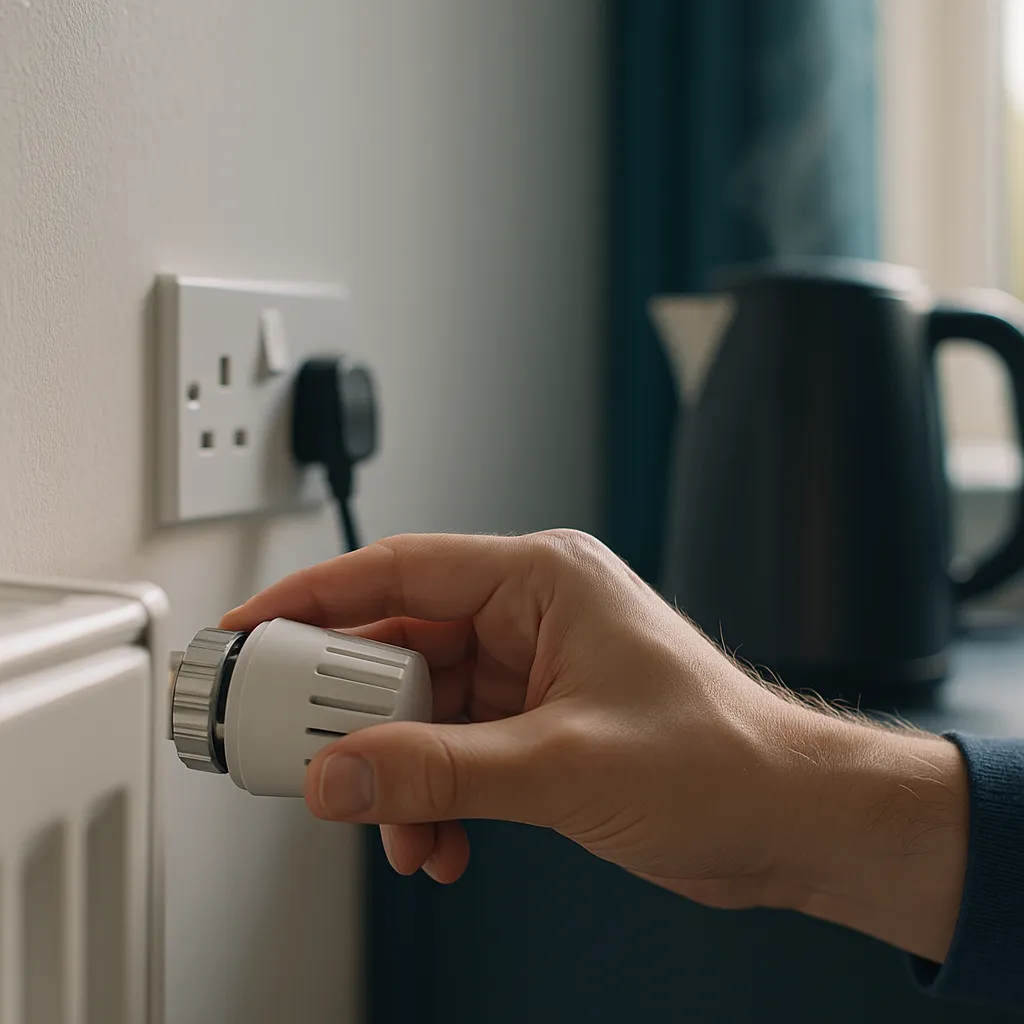
Sources: Ofgem price cap guidance; GOV.UK gas conversion rules; Energy Saving Trust quick tips. Links provided in context.
Introduction
Want a realistic UK energy bill estimate in minutes? This guide shows you how bills are built and gives you a simple calculator you can use right now.
In Great Britain (England, Scotland, Wales), suppliers bill for two things: the energy you use (unit rate in pence per kWh) and a daily standing charge. Most households pay 5% VAT on top. Prices change quarterly under Ofgem’s energy price cap, which limits the maximum unit rates and standing charges that suppliers can charge on standard variable tariffs — not the total of your bill. See Ofgem for details and current cap dates.
Below you’ll learn which numbers to gather, how the maths works, and how to sanity‑check your result against typical UK usage. Then try the calculator and, if you like, re‑run it with a lower kWh to see what small changes could save.
How an energy bill calculator works in the UK
At its core, an estimator multiplies your usage by your tariff’s unit rate and adds standing charges for the number of billing days. With VAT already reflected in the typical rates, you can keep the inputs simple.
- Electricity: (electricity kWh × unit rate p/kWh) + (standing charge p/day × days)
- Gas: (gas kWh × unit rate p/kWh) + (standing charge p/day × days)
Gas meters often show volume, not kWh. To convert under UK rules: metric m³ × calorific value × 1.02264 ÷ 3.6 = kWh. If your meter is imperial, first convert ft³ × 2.83 to get m³. See GOV.UK for the step‑by‑step.
Most online tools expect kWh. Remember: standing charges can be a large share of low‑usage bills. Sources: GOV.UK gas conversion and Ofgem price cap.
What to gather before you click ‘Calculate’
Grab a recent bill or your app and find:
- Electricity unit rate (p/kWh) and standing charge (p/day)
- Gas unit rate (p/kWh) and standing charge (p/day), if you have gas
- Your recent usage in kWh (smart‑meter in‑home displays help track it daily)
- The number of billing days in the period
- Your payment method (Direct Debit, standard credit, prepayment) and region
If you don’t have a bill handy, you can look up typical regional cap rates on Ofgem and use those as a starting point. Economy 7 or other time‑of‑use tariffs? Estimate your day/night split before you run the numbers.
Try it now: energy bill calculator
Start with sensible defaults based on the current Ofgem cap period, then tweak the unit rates and your kWh to match your tariff. Run two scenarios — your current usage and a target after a few quick efficiency tweaks — to see the difference.
Sensible GB defaults shown. Edit to match your tariff or region. VAT assumed included in unit rates.
Your estimate
Electricity
Gas
Monthly total: $0.00
Projected annual total: $0.00
Formulae: Electricity = kWh × rate + days × standing; Gas = kWh × rate + days × standing. Rates entered as pence; results include 5% VAT as reflected in typical published rates.
Default rates reflect Ofgem’s GB averages for 1 Oct–31 Dec 2025 and include VAT. For precision, enter your supplier’s rates for your region.
Reference rates and typical use: UK snapshot (Oct–Dec 2025)
For Direct Debit customers on standard variable tariffs, Ofgem’s GB averages this quarter are approximately: Electricity 26.35p/kWh and 53.68p/day; Gas 6.29p/kWh and 34.03p/day. Ofgem’s headline “typical household” dual‑fuel bill is around £1,755 a year.
Typical Domestic Consumption Values (TDCV) for a medium user: Electricity 2,700 kWh/year (~225 kWh/month); Gas 11,500 kWh/year (~960 kWh/month). DESNZ reporting suggests average dual‑fuel bills in 2024 were roughly £1,730, still above pre‑crisis levels. Sources: Ofgem TDCV and DESNZ performance reporting.
Accuracy check: 8 common pitfalls that skew your estimate
- Forgetting standing charges entirely.
- Using ex‑VAT unit rates by mistake.
- Mixing gas meter units (m³ vs ft³) or skipping calorific value and the 1.02264 correction.
- Applying the wrong region or payment method rates.
- Ignoring multi‑rate tariffs (Economy 7/time‑of‑use) and putting everything at one price.
- Undercounting the number of days in the billing period.
- Typing power (kW) instead of energy (kWh).
- Thinking the price cap limits your total bill — it caps unit rates and standing charges only (Ofgem).
See GOV.UK for gas conversion and Ofgem for regional tables and Economy 7 guidance.
Economy 7, electric heating and prepayment meters: quick adjustments
- Economy 7/time‑of‑use: estimate your day/night split (e.g., 60/40). Run the calculator twice with each unit rate and add the results, or use a weighted average if your supplier provides one. Ofgem’s RTS switch‑off is complete; smart meters support dual‑rate tariffs.
- Electric‑only homes/heat pumps: expect higher electricity kWh. Ensure your standing charge and unit rate match an electric‑only tariff.
- Prepayment meters: standing charges and unit rates can differ from Direct Debit. Enter your supplier’s prepay rates for accuracy.
More help: Ofgem’s Economy 7 guide and Citizens Advice on using appliances efficiently.
Turn your result into a monthly plan
Use your estimate to set a monthly “energy pot” in your budget. That helps smooth winter highs and summer lows, and you can compare it to your direct‑debit amount to keep cash flow steady. Track usage with your smart meter or in‑home display so you can course‑correct early.
If bills look unaffordable, contact your supplier as soon as possible to arrange a payment plan. You may also be eligible for the Warm Home Discount (£150 for eligible households) or Cold Weather Payments in England and Wales (£25 per 7‑day trigger period).
Quick wins to lower the bill you just calculated
- Use the kettle “right‑fill” rule — boil what you need. Savings add up over a year.
- Four‑minute showers instead of long soaks can cut hot‑water energy use noticeably.
- Switch appliances off at the socket to avoid standby losses.
- Run laundry at 30°C with full loads; avoid tumble dryers where possible.
- Fit LED bulbs in high‑use rooms; they use far less electricity than halogens.
- Draught‑proof doors and windows; small gaps can waste a lot of heat.
Savings ranges are based on Energy Saving Trust quick‑tips pages and are indicative. Re‑run the calculator with a 5–15% lower kWh to see your potential annual saving.
How 118 118 Money can help
Staying on top of energy costs is part of your wider Financial Fitness plan. Use your 118 118 Money online account or app to track spending, set aside a monthly energy pot, and stay in control. If a big one‑off cost (for example, a boiler replacement or insulation work) risks knocking your plan off course, review your options carefully and speak to your supplier first about support.
118 118 Money offers fixed‑rate personal loans and a simple‑rate credit card, subject to status and affordability checks. Loan overpayments are allowed, which can reduce the interest you pay overall.
FAQ: energy bill calculator UK
1) How accurate is an online energy bill calculator? It’s an estimate — accuracy depends on using your exact kWh, region and tariff rates.
2) Does the Ofgem price cap limit my total bill? No. It caps unit rates and standing charges on SVTs, not your final total (Ofgem).
3) Should I include VAT? Yes. Most quoted cap rates already include 5% VAT — use those figures.
4) How do I handle Economy 7 in a single‑rate calculator? Run two passes (day and night kWh at their rates) and add them, or use a weighted average.
5) Why did my estimate change this quarter? Ofgem reviews the cap and regional rates every quarter; defaults here update accordingly.
6) How do I convert gas meter units to kWh? Metric m³ × calorific value × 1.02264 ÷ 3.6; for ft³, convert to m³ first ×2.83 (GOV.UK).